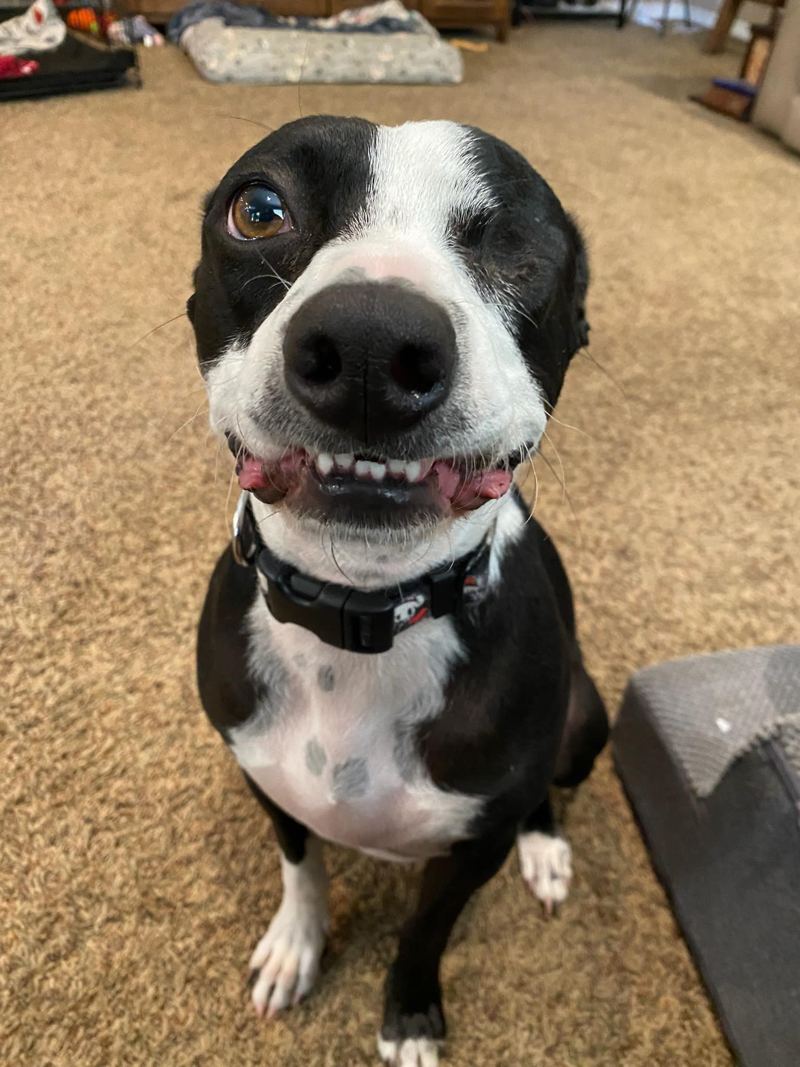
Why does my dog bark and lunge at other dogs on walks?
You're walking along, everything is fine, and then another dog turns the corner. Suddenly your sweet dog is barking, lunging and spinning at the end of the leash. Here's what your dog is trying to tell you, and what you can do on your very next walk.
First, the most important thing: your dog is not being bad, and you are not a bad owner. Barking and lunging is called reactivity, and it is one of the most common reasons people call me. It is a big reaction to something your dog sees, hears or smells. It is also a message.
Four reasons dogs react on leash
Two dogs can bark at the same dog for completely different reasons. Before we change anything, we need to know which message your dog is sending.
- "Back off, I'm scared." Fear. The bark is there to make the scary thing leave before it gets close.
- "I want to say hi and I can't!" Frustration. The leash holds them back, and all that want comes out as noise.
- "I've got this, stay behind me." Guarding. Your dog thinks keeping you safe is their job.
- "It's all too much today." Overload. Stress stacks up during the day until one more thing tips them over.
Why the leash makes it worse
On a leash, your dog can't do what dogs naturally do when they feel unsure: move away, curve around, sniff the ground and take their time. Their options shrink, so the message gets louder.
Your energy travels down the leash too. When you spot a dog and your hand tightens, your dog feels it. A tight leash can tell your dog something is wrong before they even see the other dog.
The whispers come before the bark
Most reactive dogs send small signals first. Learn to see these and you can step in while your dog can still hear you:
- A hard stare with a still body and ears forward
- A soft, open mouth that snaps shut
- A sudden freeze mid step
- A lip lick or a quick yawn that doesn't fit the moment
Every dog has their own version of these. Learning your dog's exact signals is one of the first things we do together.
One thing you can do right now
Give your dog more space than you think they need. Cross the street or turn around early. Distance keeps your dog under their limit while we figure out the rest.
Why there's no one-size fix
A scared dog, a frustrated dog and a guarding dog can look the same at the end of the leash, but they need completely different plans. That's why "just correct them" or a training video often makes things louder. The plan has to match the message your dog is sending.
"I saw it way before you did. I need help."
When to get help
If walks feel like a mission, you're walking at odd hours to avoid other dogs, or the reactions are getting bigger, it's a good time to bring in help. In a Translation Session I meet you and your dog, watch what sets them off and explain what I see in plain words. Then we make a plan, through Day Training or private lessons at your home.
Your dog has been talking all along.
Stop guessing and walking on eggshells. Start with one session and hear what they've been saying.
5.0 from 36 Google reviews