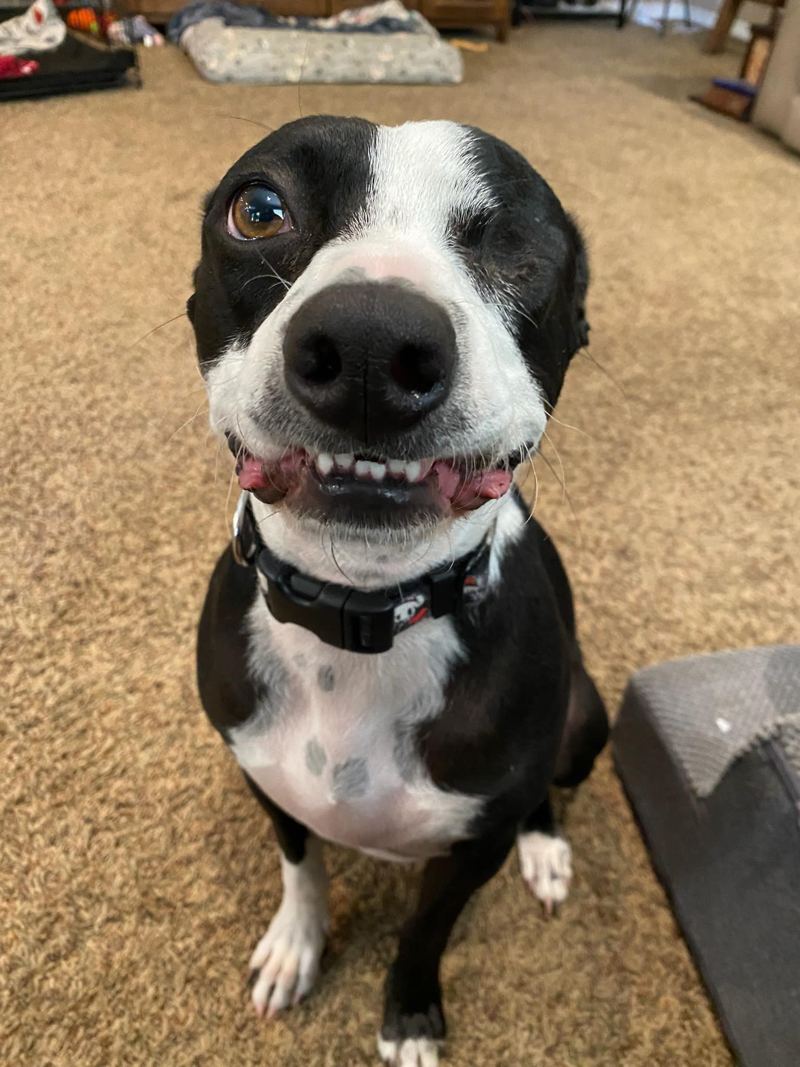
Reactive dog training · Boise, Idaho
Your reactive dog isn't bad. They're overwhelmed.
Every lunge is a sentence.
Barking, lunging and pulling at other dogs, people or cars is your dog's loudest way of saying "this is too much." I teach you to hear the quiet signals that come first, so you can answer them before the big reaction ever happens.
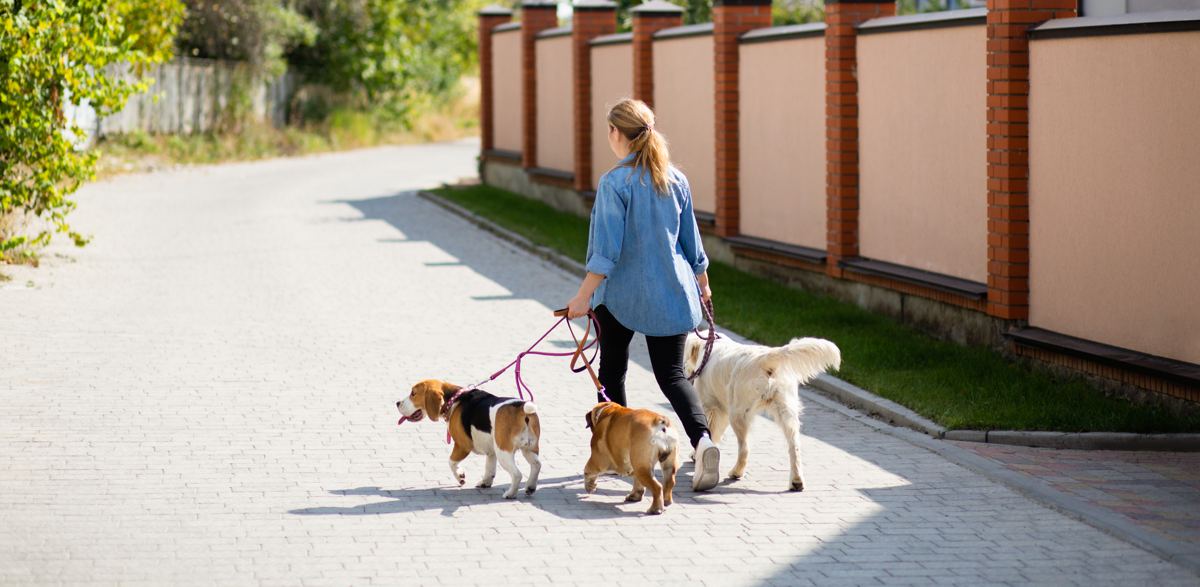
Sound familiar?
Walks shouldn't feel like a mission
- ✦
You walk at odd hours
Early mornings or late nights, just so you don't run into another dog.
- ✦
You cross the street a lot
You scan every corner and your hand is already tight on the leash.
- ✦
People give advice
"Just correct them." "Be the alpha." You've tried, and it only got louder.
- ✦
You feel embarrassed
You love this dog. You just want to enjoy a walk together again.
The translation
What reactivity is really saying
Two dogs can bark at the same dog for completely different reasons. Before we change anything, we figure out which message your dog is sending.
"Back off, I'm scared."
Fear. The bark is there to make the scary thing go away before it gets close.
"I want to say hi and I can't!"
Frustration. The leash holds them back, and all that want comes out as noise.
"I've got this, stay behind me."
Guarding. Your dog thinks keeping you safe is their job, and it's a heavy one.
"It's all too much today."
Overload. Stress stacks up over the day until one more thing tips them over.
Before the bark
The whispers come first
Most reactive dogs send several small signals before they explode. Learn to see these and you can step in while your dog can still hear you.
The hard stare
Eyes locked on the other dog, body still, ears forward. This is the moment to create space.
The closed mouth
A soft, open mouth snaps shut. Often paired with a lip lick or a quick yawn.
The freeze
A sudden pause mid step. Your dog is deciding what happens next.
The tight leash
Yours or theirs. A short, tense leash tells your dog something is wrong before they even see it.
How I help reactive dogs
We do this together
- 1
Translation Session
I meet you both, watch how your dog reacts and what sets them off, and explain what I see in plain words. $150.
- 2
Learn the signals
You learn your dog's body, energy and emotion, and what your own energy is telling them on the leash.
- 3
Train your way
Day Training, where your dog trains with me one full day a week and goes home every night, or private lessons at your home. Either way, you learn alongside your dog, with homework between sessions.
- 4
Walk together again
Join our free Pack Walks, where reactive dogs are welcome, to keep building confidence with support.
From a Boise client
"I've had only 3 sessions with Alicia and my two dogs have shown HUGE improvement with overall behavior. I now feel so much more confident and comfortable taking my dogs places and having people come over and having my dogs behave and listen better. Alicia listens to your concerns and takes her time to get to know you and your dog!"
Joella Child · Google review
Questions
Reactive dog FAQ
Is my dog reactive or aggressive?
Reactivity is a big response to something your dog sees, hears or smells, like barking and lunging on leash. Many reactive dogs have never hurt anyone. If your dog has bitten, or you're worried they might, read about dog aggression too. Either way, the Translation Session is where I sort out what's really going on.
Can reactivity be fixed?
Reactivity is a message, not a life sentence. Most dogs get calmer as their people learn to read the early signals and answer them. How far and how fast depends on your dog, and that's exactly what we map out in your Translation Session.
Should I stop walking my dog until we start?
You don't have to stop. Give your dog extra space, pick quieter times and routes, and turn around early when you see their body getting stiff. Every big reaction is practice, so fewer reactions now makes our work easier later. If your dog seems more scared than angry, read about fearful and anxious dogs too.
Do you work with dogs who growl, snap or bite?
Yes. Many of my clients come to me with dogs who have growled, snapped or bitten. We start with safety, often with muzzle training, and build from there.
Which program is best for a reactive dog?
Many reactive dogs do Day Training on the Behavioral path: 6 weeks, one 7 hour day a week on Tuesdays or Thursdays, with optional door-to-door pickup. If Day Training isn't a good fit for your dog, In-Home Behavioral Training is 8 private lessons at your home. We decide together in your Translation Session. See programs and prices.
What areas do you serve?
Boise, Meridian, Nampa, Eagle, Star and Caldwell. Day Training has optional door-to-door pickup, and In-Home lessons come to you.
Your dog has been talking all along.
Stop guessing and walking on eggshells. Start with one session and hear what they've been saying.
5.0 from 36 Google reviews